
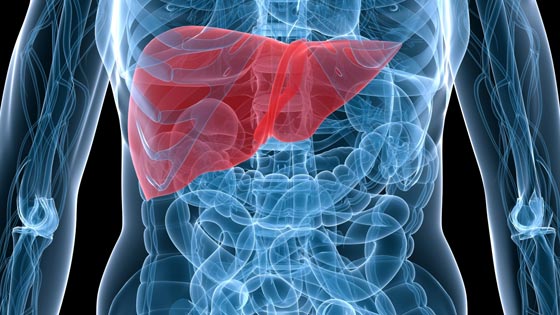
Not feeling yourself lately?
Feeling general malaise or just feeling worse after your meals?
Perhaps you’re on lots of medications or partying hard this festive season.
Whatever your situation, your liver’s duties are so vital to your well-being that you’ll benefit helping it perform at its best.
What does my liver do?
Your liver is an astonishing organ and its vitality is to a very large extent the determinant of your overall health and vitality.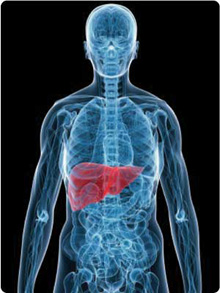
Located on your right side just under the ribs, it’s the largest gland in the body, sometimes holding up to a quarter of your body’s blood supply. Working closely with the Pancreas, your liver receives blood from your stomach, intestines and spleen for detoxifying, however, this is just the tip of the iceberg. Its range of functions is as numerous as they are astounding. Here’s a list of the main ones:
- Maintains blood glucose level
- Synthesises Cholesterol
- Responsible for Carbohydrate (sugars), lipid (fats) and protein metabolism
- Process and detoxify alcohol and drugs (medicinal and recreational)
- Process and excrete hormones
- Synthesises Bile
- Stores Vitamins (A, B12, D, E, K)
- Stores minerals such as Iron and Copper
- Activates Vitamin D
- Processes dead Red & White Blood Cells and some bacteria.
What signs point to liver insufficiency?
Generally, there are a few signs herbalists and naturopaths look for that can serve as a guide. These are just a guide only and I hope you use them as such and not as a definitive. However, it’s likely that the more of these you’re experiencing consistently period of time, the higher the probability your liver is underperforming.
- dark circles under the eyes
- yellow coated tongue
- fatigue
- nausea
- fat intolerance
- frequent irritation and anger
- constipation
- skin problems
- bad digestion
- bloating and gas
- headaches.
Herbal Actions 101
HEPATIC – Pertaining to the Liver. In Herbalism it is the action of a herb that assists the liver in its function and promotes the flow of bile.
What herbs are good for my liver?
Liver herbs are called Hepatics to describe their action. A herb has multiple actions due to the diversity of their chemistry, something I want to explain further in a future post. The action is then compared with its property, such as whether it’s warming or cooling, drying or moistening. This is why one herb works really well for one person and not for another (possibly making them worse).
As an example, let’s say you have an inflammatory type liver state, inflammation as the name suggests means heat. Therefore, you’d be wise to stay away from a warm hepatic but rather choose a cooling one (reduces the heat of inflammation).
On the other hand an under-functioning, chronic liver problem without inflammation would be best served by a warming hepatic (increases circulation and activity).
Milk Thistle
Known traditionally worldwide as the quintessential liver herb, Milk Thistle (Silybum marianum) also has extensive modern research validating its use as a liver protector and regenerator.
It’s commonly used to treat liver and gallbladder disorders such as Hepatitis, Cirrhosis, Alcohol and toxic liver damage and increasing the flow of Bile. It’s best taken, however, as a standardised extract to contain at least 80% Silymarin and 30% Silybinins – its active ingredient.
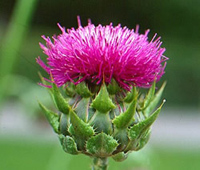
Actions: Protects liver cells from damaging effects of toxic substances, promotes regeneration of liver tissue, antioxidant, anti-inflammatory, mild cholagogue.
Properties: Herbalists consider Milk Thistle to be moist and cooling.
Dosages: for Silymarin range from 150mg as a general tonic to 1000mg daily for severe conditions.
Side effects: may include GI upset or a mild laxative effect for a small percentage of people.
Dandelion
This common garden weed has been a popular medicinal and nutritional choice for millennia. Whilst the above ground aerials are best suited to the kidneys, the roots, however, are best for liver ailments.
Being a mild hepatic, it makes for a fantastic long term liver tonic. It’s also used in jaundice and liver congestion. If you’re new to liver herbs and a bit wary, then Dandelion would be my recommendation as a starting choice.
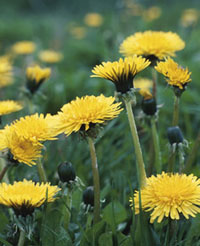
Actions: Hepatic, cholagogue, antirheumatic, mild laxative, tonic, bitter
Properties: Herbalists consider Dandelion Root to be moist and cooling.
Dosages: for Dandelion Root range from 1500mg as a general tonic to 6000mg daily for severe conditions.
Side effects: None known
Contraindications: Dandelion Root should not be used in biliary abscess or obstruction.
Boldo
Although Boldo (Peumus boldus) is primarily a Gallbladder herb, its liver protective and bowel cleansing properties should not be underestimated. It has been traditionally used to strengthen the liver, digestive and bowel disorders and expel intestinal worms/liver flukes.
Boldo is the chief remedy for gallstones and gallbladder complaints and pain. However, it’s so effective in dumping gallstones and grit that it may be best to use under professional supervision in case of gallbladder duct obstruction.
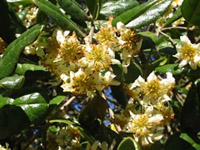
Actions: Cholagogue, hepatic, stomachic, antispasmodic, antioxidant, antimicrobial, anti-inflammatory, diuretic, anthelmintic.
Properties: Herbalists consider Boldo Leaf to be drying and cooling.
Dosages: for Boldo Leaf range from 1500mg as a general tonic to 6000mg daily for severe conditions. Limit usage to no longer than 90 days. Best taken as a tea.
Side effects: None known
Contraindications: Boldo should not be taken in cases of biliary obstruction, severe liver disorders, kidney disease and during pregnancy and lactation. In cases of nonobstructive gallstones, boldo can be used but only on health professional’s advice.
Schizandra
A fantastic all-around adaptogen, Schizandra (Schisandra chinensis) not only improves physical, sexual and mental performance, resistance to stress and endurance but it’s also a remarkable liver tonic.
Schizandra is indicated in liver disease, hepatitis, liver damage or just improving liver function by enhancing its detoxifying and regenerative capacity. One of my personal all-time favourites.
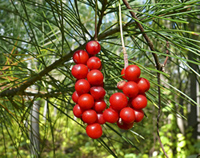
Actions: Protects liver cells from damaging effects of toxic substances, promotes regeneration of liver tissue, immunomodulant, neurotonic, antioxidant,
Properties: Herbalists consider Schizandra to be warm and drying.
Dosages: for Schizandra Berry range from 1500mg as a general tonic to 6000mg daily for severe conditions. It’ll take several weeks use to feel energy enhancement.
Side effects: Mild GI upset in a very small percentage of people. Take with food if this happens.
Contraindications: Contraindicated in pregnancy, except to assist childbirth.
Andrographis
Andrographis is a little known and underestimated herb which is used primarily as a broad-spectrum antibiotic and immunostimulant for a variety of bacterial, viral, and parasitic conditions.
Although its main popular use is in infections, being extremely bitter makes it extremely effective at liver issues. Coupled with its infection fighting prowess and you have a potent liver detoxifier and anti-inflammatory.
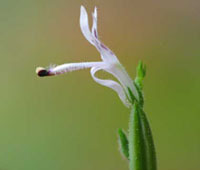
Actions: Bitter tonic, anti-inflammatory, antipyretic, antibacterial, choleretic, liver protective, mild immunomodulant.
Properties: Herbalists consider Andrographis to be Cold and Drying.
Dosages: for Andrographis leaf range from 1500mg as a general tonic to 6000mg daily for severe conditions.
Side effects: Gastric upset possible at higher doses
Contraindications: Andrographis should not be used during pregnancy or “cold” chronic conditions.
In Conclusion
Although these are my favourite hepatics, there are quite a few other herbs that support liver function and healing by being bitter or cholagogues (Bile producing/excreting): Burdock, Dan Shen, Gentian, Baical Skullcap, Chanca Piedra, Turmeric, Goldenseal, Wormwood, Yarrow, Yellow Dock.
The choice is dependent on their other actions, properties and synergy with other herbs. I’ll be writing more about this in the future so stay tuned.
Have you used any of these? If so, what’s been your experience? If not, what’s your favourite liver herb(s) and what’s worked for you? Was this post helpful? Leave your comments below.
Bibliography
British Herbal Medicine Association. Scientific Committee. British herbal pharmacopoeia. London: The Committee.
Hoffmann, D. (2003). Medical herbalism : the science and practice of herbal medicine. Rochester, Vt.: Healing Arts Press.
Mills, S., & Bone, K. (2000). Principles and practice of phytotherapy : modern herbal medicine. Edinburgh ; London: Churchill Livingstone.
Skenderi, G. (2003). Herbal vade mecum : 800 herbs, spices, essential oils, lipids, etc., constituents, properties, uses, and caution. Rutherford, N.J.: Herbacy Press.
 onlineherbalist.com.au
Reblogged this on #NitroGirl Headquarters: BodyShaping Studio.
LikeLiked by 1 person
Very helpful information.
LikeLiked by 1 person
Thank you, glad it’s of service 🙂
LikeLike
Very interesting and informative. Just one question….how do you know whether you need warming or cooling herbs?
Thanks
Susana
LikeLike
It’s dependent on whether you have cold or hot type symptoms. Think of cold symptoms as deficient type symptoms and hot symptoms as excessive, inflammatory type symptoms. I’ll release an article soon explaining it.
LikeLike
I’ve been subscribing to your array of herbs for the past 6-8 months. Initially as supplementary treatment for cancer, ie alongside chemotherapy and radiation courses. After about a week of taking turmeric, Japanese knotweed, grape seed initially my asophoghus tumour was much more tolerant to swallow food. Along with chemo and radiology I started including graviola and schizandra mixing up the days I took to keep the cancer cells guessing if you like. Anyway eventually the tumor shrank and all signs of cancer disappeared. Like yourself Jorge I do not put the improvements down solely to the herbs, certainly the chemo and radiation did their job, however I know within myself that things improved dramatically from when I started to amplify the attack on the cancer with herbal assistance. I’m now back at work and feeling good albeit with an eye out for any reoccurrence of my condition, and a sworn convert to herbology. My thanks to you and your good people for making available a quality product. Peter Q
LikeLiked by 1 person
That’s sensational news Peter. Thank you from the bottom of my heart for sharing your story and acknowledging that conventional medical treatment is not to be ignored nor replaced by herbs. Herbs and nutrition help the organism withstand the onslaught to the immune system from chemo and sometimes, even aid chemo’s efficacy. There’s plenty of research to substantiate your experience. Nevertheless, my heart always sings when I hear someone has survived the gauntlet of Cancer, let alone through the use of herbs to assist treatment.
Jorge
LikeLike
Thank you, may I also mention perhaps the reason I’m on this page is that I was doing a little more research, I’ve been interested in revitalising myself wholly and before I also had high blood pressure and fatigue issues which I’ve managed to get back in tow, so basically what I’m trying to say to anyone with similar issues is; Research, remain positive, believe in your strengths. I guess I’m one of the lucky one’s thus far and always remember we are all complex beings give yourself every chance of rehabilitation: Remember, sleep is the best medicine. Incorporated with good herb of course, thanks Jorge for the opportunity to express my view.
LikeLiked by 1 person