
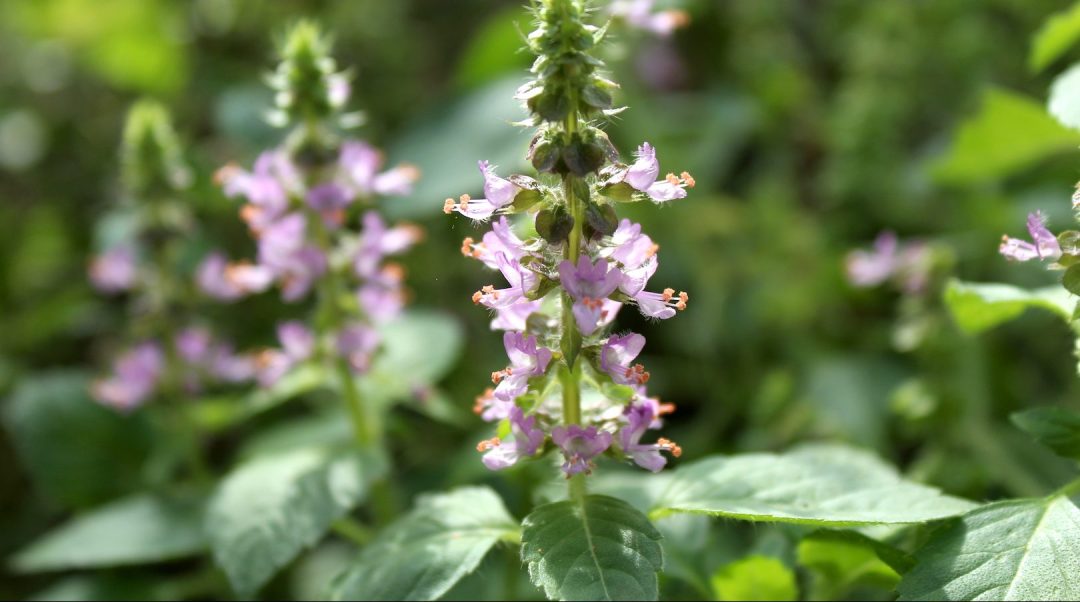
Tulsi (Holy Basil) comes from India, where it is revered as the herb sacred to the goddess Lakshmi, wife of Vishnu, the god who preserves life. Tulsi means “matchless,” and the herb has very important medicinal properties – notably its ability to reduce blood sugar levels. In Indian herbal medicine, holy basil has a wide range of uses, relieving fevers, bronchitis, asthma, stress, and canker sores.
Botanical Name
Ocimum sanctum
Part Used
Leaf
Common Names
Holy Basil, sacred basil, pagoda tulsi, East Indian basil, purple-stalked basil, sacred herb, tulasi (Sanskrit); Basilic sacre (French); Tulssi; Surasa; Krishnamul; Vishnu-priya; Kala-tulasi (Hindi); Unani – Tulsi; Bengali – Krishna tulasai; Tamil – Thulasi
Brief History

Holy basil has been grown for nearly 3000 years in Indian gardens, courtyards and temples. It is the most celebrated of the bails in history and legend and the most sacred plant in Hinduism. It is the important holy “Tulsi” or “Tulasi”, considered to be a reincarnation of the wife of Vishnu and a symbol of fidelity or pure divine love. The plant is dedicated to the Hindu god Krishna and is therefore planted in sacred places.
Constituents
Volatile oil (with eugenol, methylchavicol = estragole, etc.; depending on the origin, etc.), flavonoids (flavones: molludistin, etc.). It possibly contains Lamiaceae tannins (rosmarinic acid and other caffeic acid derivatives) and triterpenes
Therapeutic Properties
Mild antihyperglycemic, anti-inflammatory, antimicrobial, expectorant, antispasmodic, tonic.
Vitalist Properties
Temperature: Warm
Moisture: Dry
Therapeutic Indications
diabetes, inflammatory and spastic conditions of the upper respiratory tract (the common cold, bronchitis, coughs; also as a diaphoretic hot tea) and gastrointestinal tract (diarrhea, etc.), and for minor fatigue and feeling of weakness, mild depression.
Primary Uses
Vitality
Holy basil has always been considered to be a tonic, invigorating herb, useful for improving vitality.
Stress
Holy basil is thought to have an affinity with the heart, protecting it from stress and lowering blood pressure and cholesterol levels. It has a reputation for reducing stress and is regarded as adaptogenic – helping the body to adapt to new demands and stresses.
Diabetes
The herb’s ability to help stabilize blood sugar levels makes it useful in the treatment of diabetes.
Dosage (Divided Daily)
- Dried Leaf (Tea): 3,000 – 10,000mg
- Dried Powder: 2,000 – 10,000mg

Contraindications
- None known
Side effects
- None known
Interactions with other drugs
- None known
Bibliography
- Chevallier, A. (2000). Encyclopedia of herbal medicine (2nd American ed.). New York: DK Pub.
- Skenderi, G. (2003). Herbal vade mecum: 800 herbs, spices, essential oils, lipids, etc., constituents, properties, uses, and caution. Rutherford, N.J.: Herbacy Press.
All material on this website is provided for your information only and may not be construed as medical advice or instruction. No action or inaction should be taken based solely on the contents of this information; instead, readers should consult appropriate health professionals on any matter relating to their health and well-being.
 onlineherbalist.com.au