

Botanical Name
Passiflora incarnata
Part Used
Aerials
Common Names
passiflora, maypop, passion vine, Maracuja, Maracuya, Passionfruit, Granadilla, Purple granadilla, Apricot vine, passionaria
Brief History
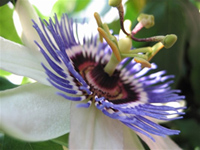
Its traditional uses, in American aboriginal medicine, by the Cherokees of the southern Allegheny mountains, the Houmas of Louisiana, and the Aztecs of Mexico, are well documented and predate its entry into conventional American and European medicine. It was introduced into conventional North American medicine in the mid-1800s, from Europe, or through Native or slave use in the South, and possibly through all of these avenues.
Today, passionflower is official in the national pharmacopeias of Egypt, France, Germany, and Switzerland, and also monographed in the British Herbal Pharmacopoeia and the British Herbal Compendium, the ESCOP monographs, the Commission E, the German Standard Licenses, the German Homeopathic Pharmacopoeia, and the Homeopathic Pharmacopoeia of the United States.
Constituents
Citric acid, flavonoids (apigenin, luteolin, quercetin, rutin, chrysin), glycosides, alkaloids (Harman, harmine, harmaline, harmol, harmalolsterols), sitosterol, stigmasterol, serotonin, sugars, gum
Therapeutic Properties
Anxiolytic. Spasmolytic. mild sedative, hypnotic
Vitalist Properties
Temperature: Cool.
Moisture: Dry
Therapeutic Indications
Alcoholism, anger, anxiety, asthmatic spasms, bronchitis, colic, cough, convulsions, diarrhea, depression, epilepsy, headache (due to stress), high blood pressure, hyperactivity, hysteria, insomnia, irritable bowel syndrome, irritability, menstrual cramps, migraine, muscle tension, neuralgia, nervous breakdown, pain, Parkinson’s disease, PMS, restlessness, seizures, shingles, spasms, stress, tachycardia, tranquilizer addiction, whooping cough, and worry.
Topically, passionflower can be used as a compress to treat boils, bruises, burns, earache, eye inflammation or irritation, skin irritation, and toothache.
Primary Uses
Anxiety
Laboratory studies in France concluded that passionflower reduces anxiety and increases the effectiveness of prescription sleep aids. Compounds in passionflower occupy the same receptor sites in the brain as benzodiazepine drugs, such as chlordiazepoxide (Librium) and diazepam (Valium), but produce less drowsiness. The alkaloids harmane and harmaline, found in passionflower, have been found to act somewhat like monoamine oxidase (MAO) inhibitors, a category of drugs sometimes prescribed for depression and other disorders. One product called Passipay is made from passionflower extract. It has been shown to have the same benefit as the drug oxazepam in reducing anxiety in patients with generalized anxiety disorder.
Insomnia
Passionflower is best known as a remedy for insomnia and disturbed sleep patterns, and is useful for bouts of sleeplessness. This herb is widely acknowledged as good for anxiety, tension, irritability, and insomnia. Its gentle sedative properties produce a relaxing effect, reducing nervous activity and panic, and making it a mild and nonaddictive herbal tranquilizer, comparable in some ways to valerian.
Addiction
Passionflower is sometimes substituted for prescription sedatives for people who are addicted to drugs or alcohol. In one study, men who were addicted to opium benefited during withdrawal from passionflower, according to the Short Opiate Withdrawal Scale. In another study, using passionflower before surgery seemed to reduce the anxiety associated with the upcoming surgery.
Clinical Research
- A randomised, double-blind, controlled,14-day trial compared clonidine (an alpha-2 adrenergic agonist, maximum dose of 0.8 mg/day) plus passionflower extract against clonidine plus placebo in the outpatient detoxification of opiate addicts. Both treatments were equally efficacious in treating the physical symptoms of withdrawal, but the group receiving passionflower showed superiority over clonidine alone in terms of managing mental symptoms. The dosage of the undefined passionflower extract was 60 drops per day.
- In a pilot, randomised, double-blind, controlled trial, passionflower extract was as efficacious as oxazepam (a benzodiazepine drug) for managing generalised anxiety disorder. However, passionflower treatment resulted in a lower incidence of impairment of job performance. The daily dose of the undefined passionflower extract was 45 drops.
- A passionflower and valerian combination improved symptoms of insomnia in uncontrolled trials. Side effects characteristic of benzodiazepine tranquilisers were not observed. In a controlled trial with comparison against chlorpromazine (an antipsychotic drug), EEG recordings showed sedative activity after 6 with the herbal combination. The dosage administered in one of these trials was 1.0 to 2.5 dessert-spoonfuls per day of syrup (100 g of which contained 25 g of passionflower extract 1:1 and 12.5 g of valerian extract 1:1).
- In a randomised, double-blind, placebo-controlled study, a single dose of passionflower extract (equivalent to 7 g of dried herb) demonstrated a sedative effect when compared with baseline values in healthy female volunteers as assessed by a self-rating scale for alertness.
- In a randomised, double-blind trial, Hawthorn (leaf and flower) combined with passionflower reduced heart rate at rest, diastolic blood pressure during exercise, plasma cholesterol and increased exercise capacity compared with placebo in NHYA stage II heart failure patients.
Dosage (Divided Daily)
• Dried Herb: 1,000 – 3,000mg
• Liquid Extract: 1 – 3mL (1:1 liquid extract)

Contraindications
Avoid large doses during pregnancy.
Side effects
Large doses may cause nausea and vomiting.
Interactions with other drugs
Potential interaction for concomitant administration of peppermint during iron intake. In anemia and cases for which iron supplementation is required, peppermint should not be taken simultaneously with meals or iron supplements.
Bibliography
- Bone, K. (2003). A clinical guide to blending liquid herbs: Herbal formulations for the individual patient. St. Louis, MI: Churchill Livingstone.
-
Chevallier, A. (2000). Encyclopedia of herbal medicine (2nd American ed.). New York: DK Pub.
-
Herbalpedia (2013)
- Mars, B. (2007). The desktop guide to herbal medicine: the ultimate multidisciplinary reference to the amazing realm of healing plants, in a quick-study, one-stop guide. Laguna Beach, CA: Basic Health Pub.
All material on this website is provided for your information only and may not be construed as medical advice or instruction. No action or inaction should be taken based solely on the contents of this information; instead, readers should consult appropriate health professionals on any matter relating to their health and well-being.
 onlineherbalist.com.au